
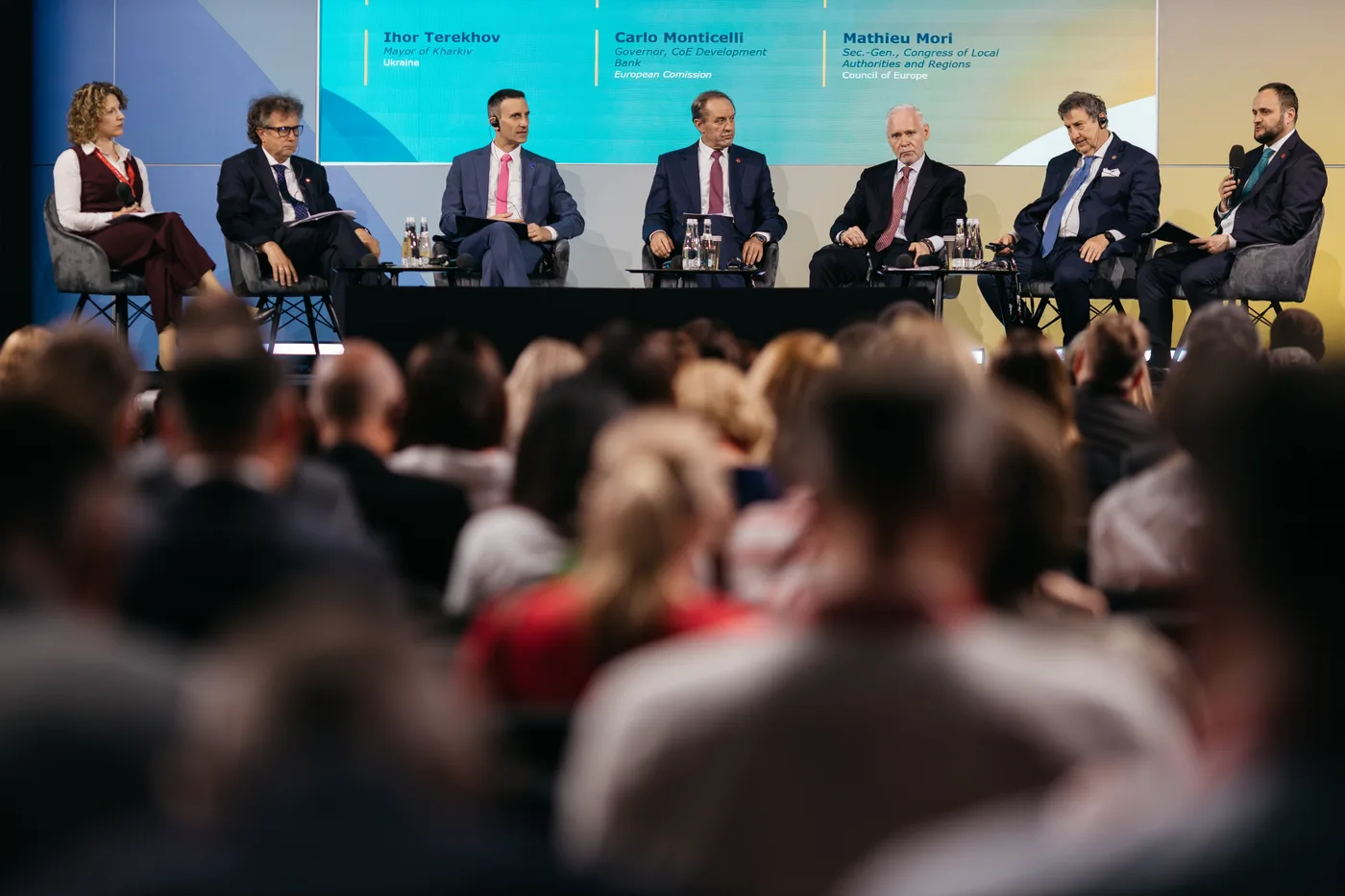
The Ukraine Recovery Conference (URC-2026) concluded with the signing of a series of important agreements for Ukraine’s Ministry of Development of Communities and Territories.
The summit clearly outlined a shift in approach: from a model of rapid response to destruction toward the logic of long-term reconstruction planning. This process rests on three key priorities: the human dimension, digitalization, and public-private partnership.
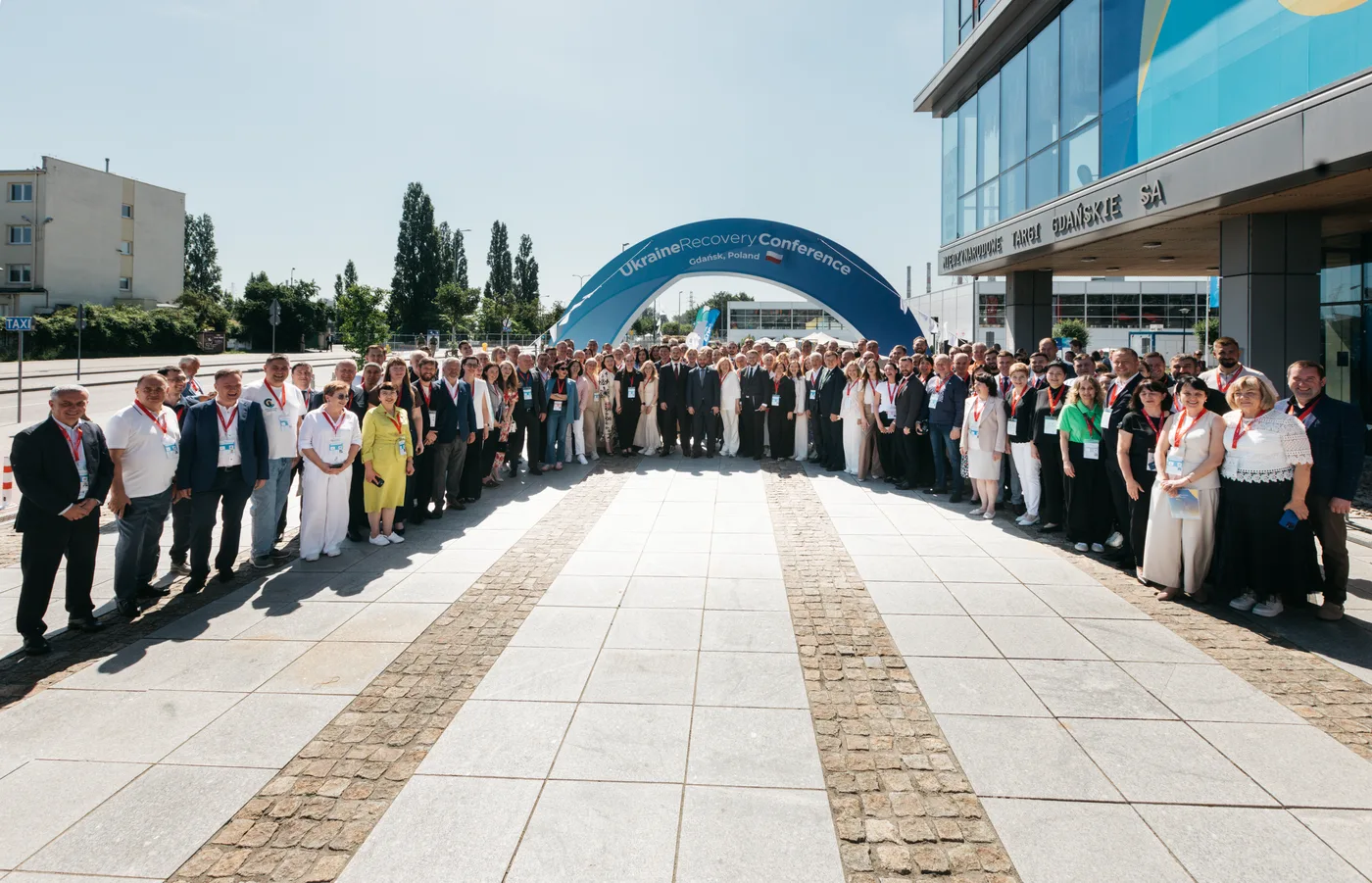
In total, the conference secured more than €1.5 billion in investment and financing. Deputy Prime Minister for Reconstruction — Minister of Development of Communities and Territories of Ukraine Oleksii Kuleba, together with First Deputy Minister Alona Shkrum and Deputy Ministers Oleksii Riabykin, Serhii Derkach, and Andrii Kashuba, signed more than 30 agreements, certifications, and memoranda.
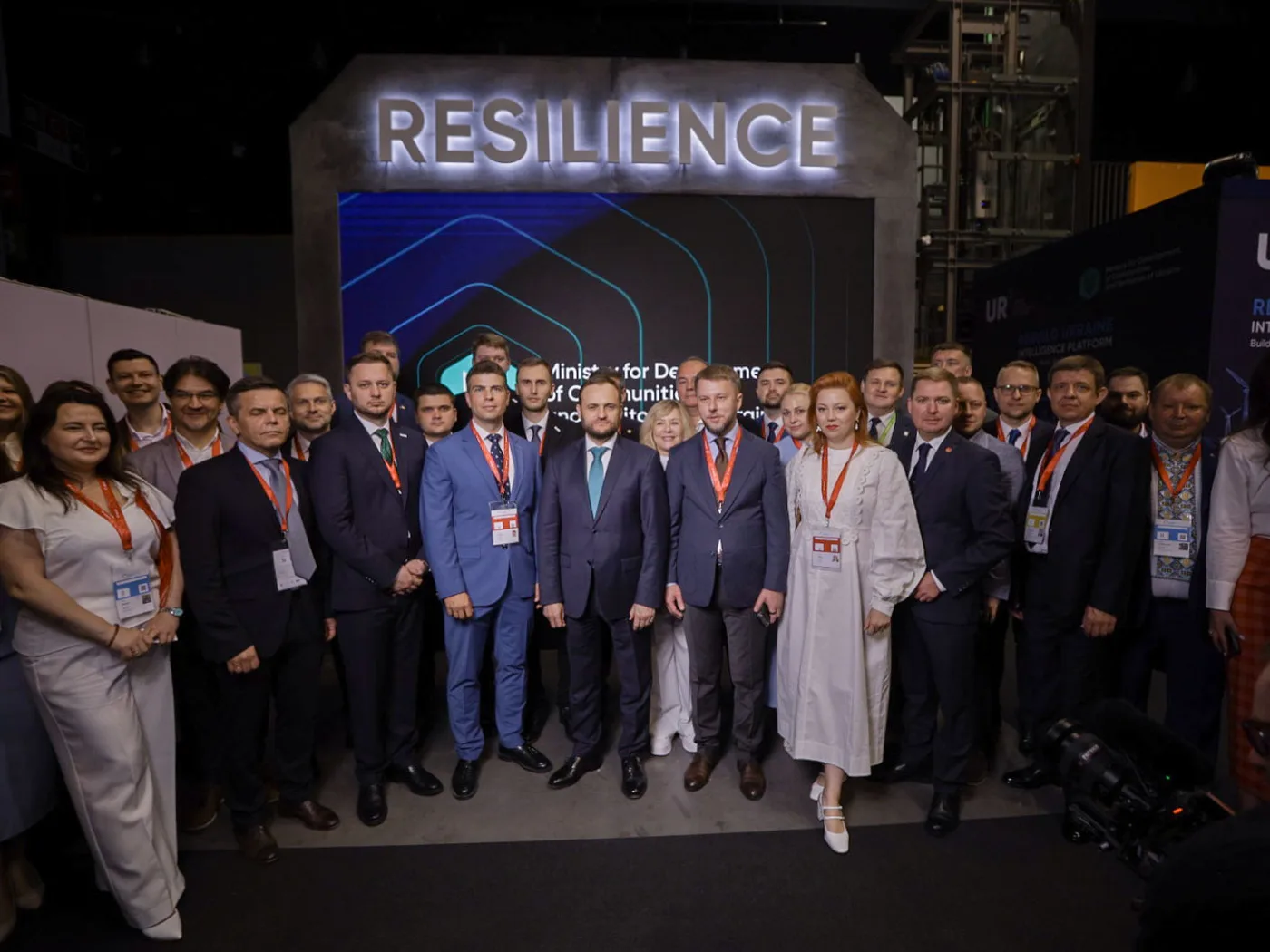
«This conference proved the main point: Ukraine is not just waiting for help — it is offering the world new standards of resilience, expertise, and a new architecture for reconstruction. We are beginning to bring AI into long-term planning, engaging private business through the public-private partnership mechanism, and turning every investment into a concrete, tangible result for our people.
The world is not merely watching Ukraine’s struggle — it is investing in our resilience. We have secured €1.5 billion in financing and investment, and communities have signed agreements and memoranda worth a total of around €300 million,» said Oleksii Kuleba.
Investment
In the housing sector, agreements worth €351 million were signed for housing programs (compensation payments, subsidized mortgages, and social housing).
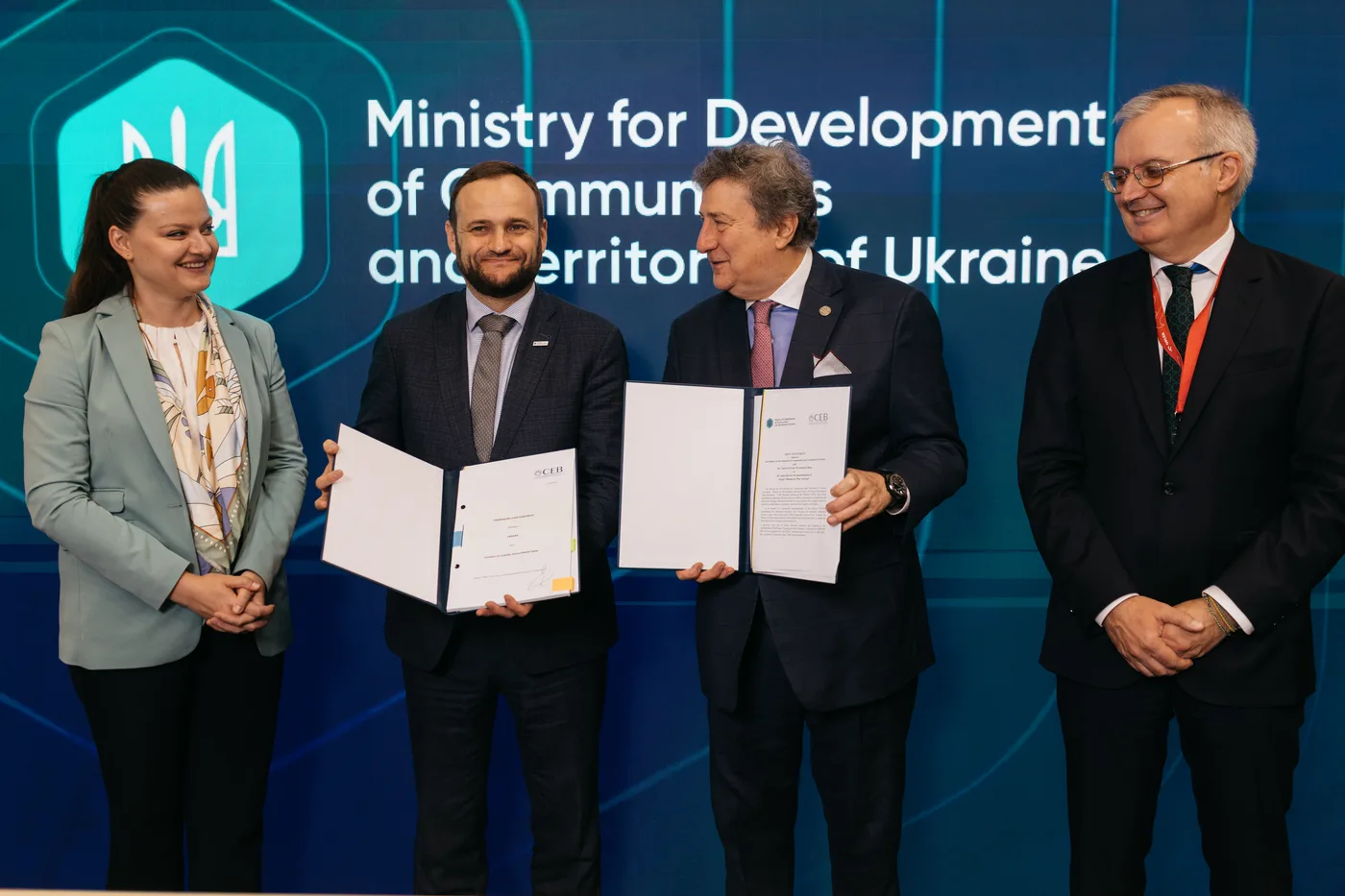
- The Council of Europe Development Bank (CEB) is allocating more than €251 million to develop housing programs and support Ukrainians who lost their homes due to Russian aggression: €100 million for compensation payments under the eRecovery program (€50 million from CEB, €50 million from the Government of Italy) and €11 million to develop the eRecovery mechanism. A joint statement covers €80 million to expand the "Housing for IDPs from the Temporarily Occupied Territories" program and finance around 2,000 housing vouchers, as well as €60 million to launch the "Housing for Veterans" program and provide more than 1,500 subsidized mortgage loans.
- Under a new support package, the European Investment Bank (EIB) is launching a €100 million pilot program for social and affordable housing for IDPs, young people, and single-parent families (combining an EU grant with a bank loan).
- The European Investment Bank also announced the signing of the "Multi-Apartment Building Energy Efficiency Recovery Program" agreement worth a total of €120 million, to be implemented by the Energy Efficiency Fund of Ukraine.
In the transport sector, €149 million was secured at URC for road repair and reconstruction.
- The European Investment Bank allocated €96 million for road and bridge repairs and the development of border infrastructure to strengthen ties with the EU, as well as a €50.05 million grant for the "Transport Connectivity in Ukraine — Phase II and Phase III" projects, for building transport interchanges and the major repair of pedestrian crossings to improve road safety and optimize traffic flow.
- The European Investment Bank also announced the signing of an agreement on border infrastructure development under the "Border Crossing Points (Tranche A)" project worth €60 million, signed an Acknowledgement on a €3 million grant under the "Solidarity Lanes" project, while the IBRD signed one on protecting rail infrastructure under the €8.5 million RELINK project.
- A Memorandum of Understanding on the Security and Connectivity Initiative between Ukraine, the European Commission, and the European Investment Bank, opening the way to €120 million in financing for infrastructure, transport, energy, and digital infrastructure.
The Ukraine Transport Support Fund was launched — an international mechanism for accelerating the modernization of transport infrastructure and Ukraine’s integration into the EU network. Lithuania, Sweden, Norway, and Estonia have already confirmed initial contributions totaling more than €3.1 million.
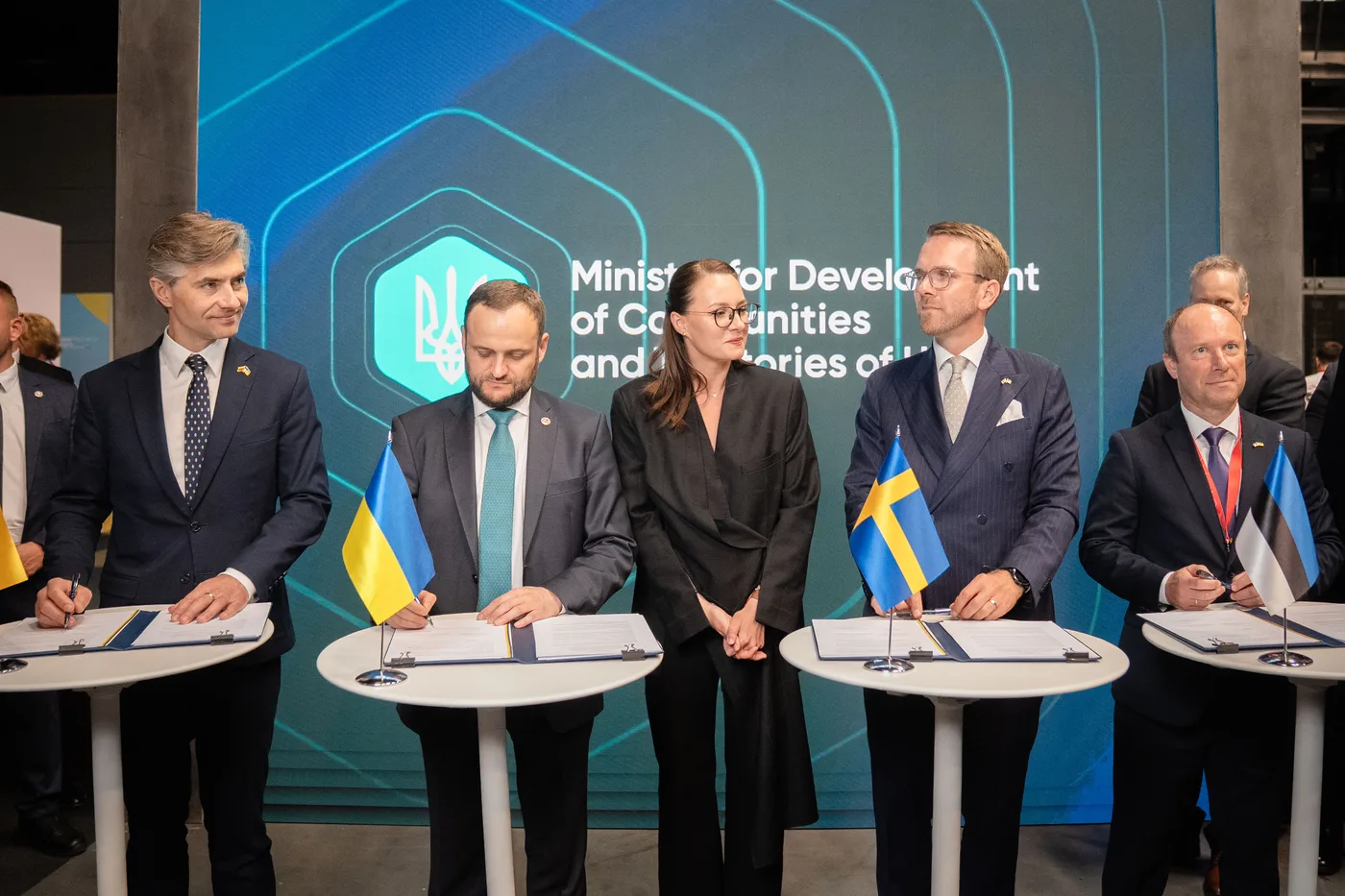
Municipal infrastructure and services:
- In the water supply and sanitation sector, a €25 million grant was allocated, along with an announced intention to sign an agreement expanding the project through a €100 million Tranche B.
- Earlier, in preparation for URC 2026, a Grant Agreement was signed between Ukraine and the Japan International Cooperation Agency (JICA) for the implementation of the Emergency Recovery Program (Phase 5) worth $39 million.
- An additional €524 million was secured for municipal infrastructure projects under the Ukraine Investment Framework (UIF) mechanism. Agence Française de Développement (AFD) allocated €276 million for the "Municipal Infrastructure for Sustainable Territories (MISTO)" project, NEFCO allocated €109 million for Ukraine’s Green Reconstruction Program, and Bank Gospodarstwa Krajowego (BGK) allocated €139 million for municipal projects.
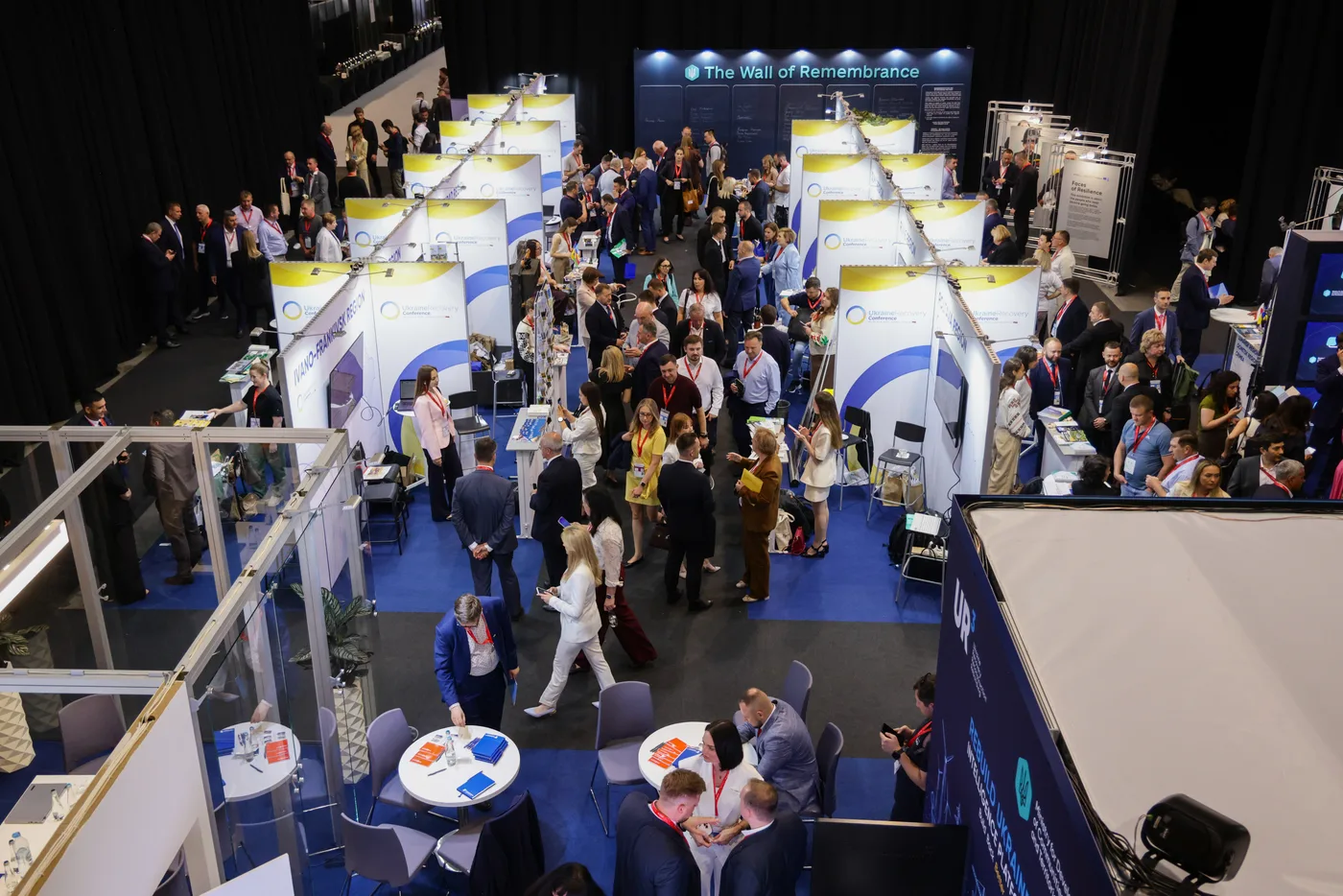
At URC, more than 150 communities presented 528 regional priority projects requiring financing. During the conference, communities and regional military administrations signed more than 30 partnership agreements and memoranda with international governments and partners, securing around €300 million in investment and grants.
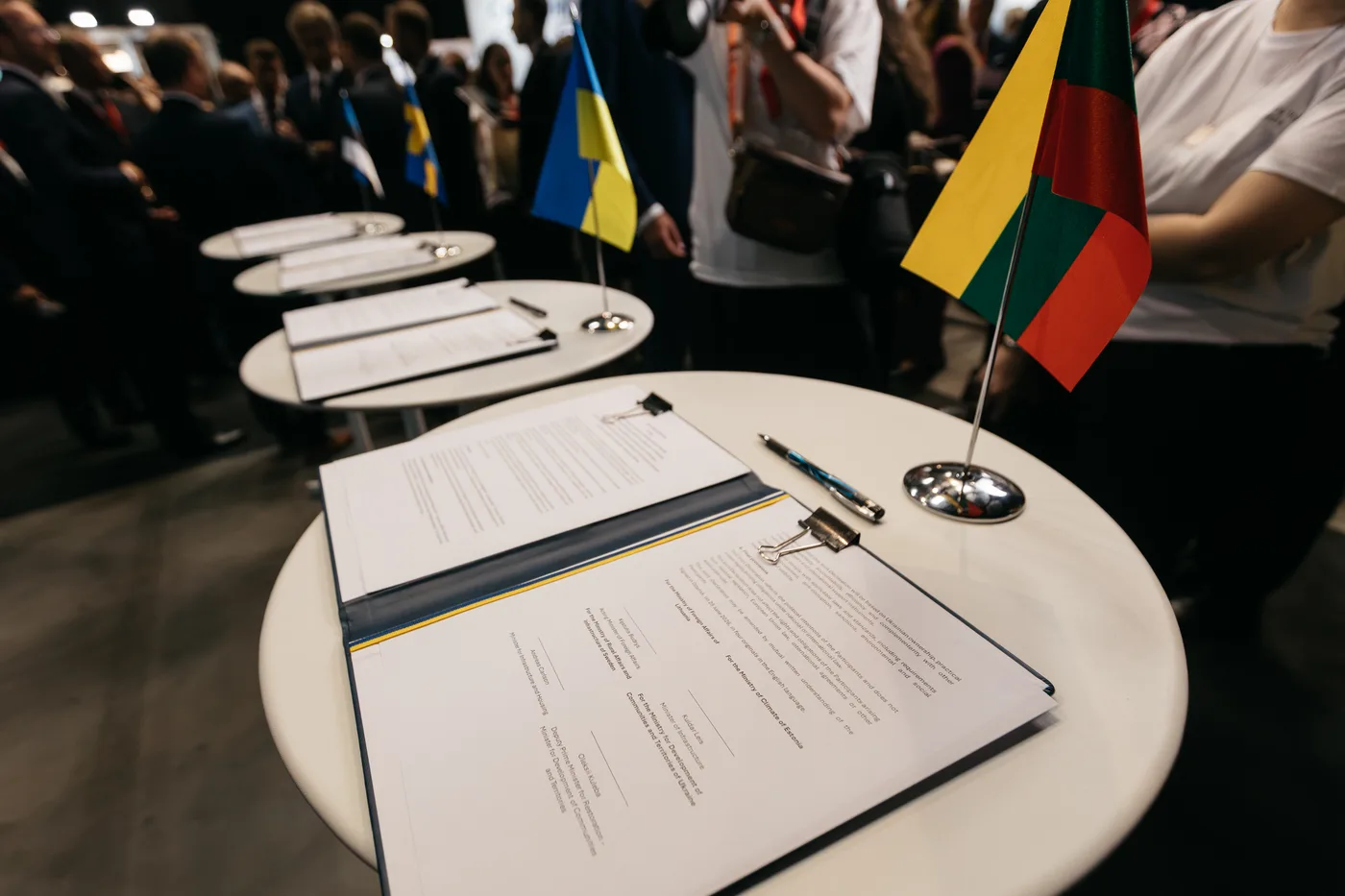
A Joint Declaration was also concluded between the Ministry of Foreign Affairs of the Republic of Lithuania and Ukraine’s Ministry of Development of Communities and Territories on strengthening cooperation between Lithuanian and Ukrainian communities, along with a Memorandum of Cooperation between the Ukrainian Sea Ports Authority and the Port of Antwerp-Bruges, and the APEC Port Training Center Antwerp/Flanders.
Public-Private Partnership
Ukraine’s Ministry of Development of Communities and Territories presented its public-private partnership (PPP) project portfolio. The portfolio currently comprises more than 30 projects, 15 of which have been designated as priorities for the current year. The expected volume of investment across these projects is €5–10 billion.
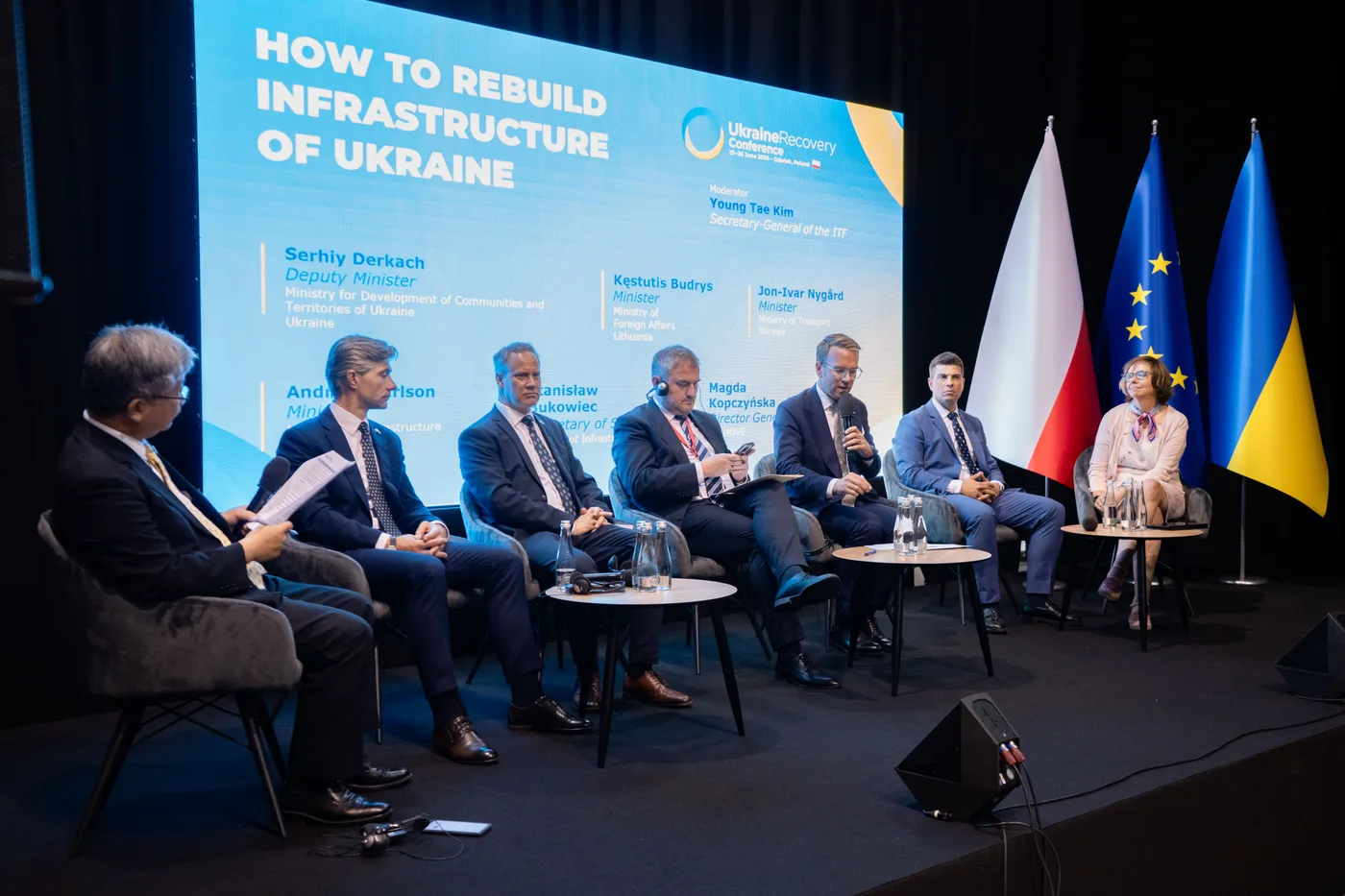
Most of the projects are in the transport sector: roads, ports, railways, and water infrastructure. In particular, the Ministry of Development presented its second public-private partnership project in the maritime sector — the concession of a ferry terminal at the Port of Chornomorsk.
Priority public-investment projects to strengthen logistics connectivity with the EU ("Solidarity Lanes") include:
- reconstruction of the M-15 Odesa–Reni road;
- modernization of the Lviv–Rava-Ruska–Krakivets–Shehyni corridor and construction of the Northern Bypass of Lviv;
- development of access roads to the border with Poland;
- expansion of the network of weigh-in-motion (WIM) systems;
- expansion of the network of service areas;
- concession of railway stations, intermodal hubs, and sea port terminals.
Innovative Technologies in Reconstruction
URC saw the presentation of the Rebuild Ukraine Intelligence Platform — a unique AI platform for comprehensive reconstruction planning. The system integrates 47 databases, international methodologies, and EU directives, making it possible to shorten the development of urban development concepts from years to a matter of hours.
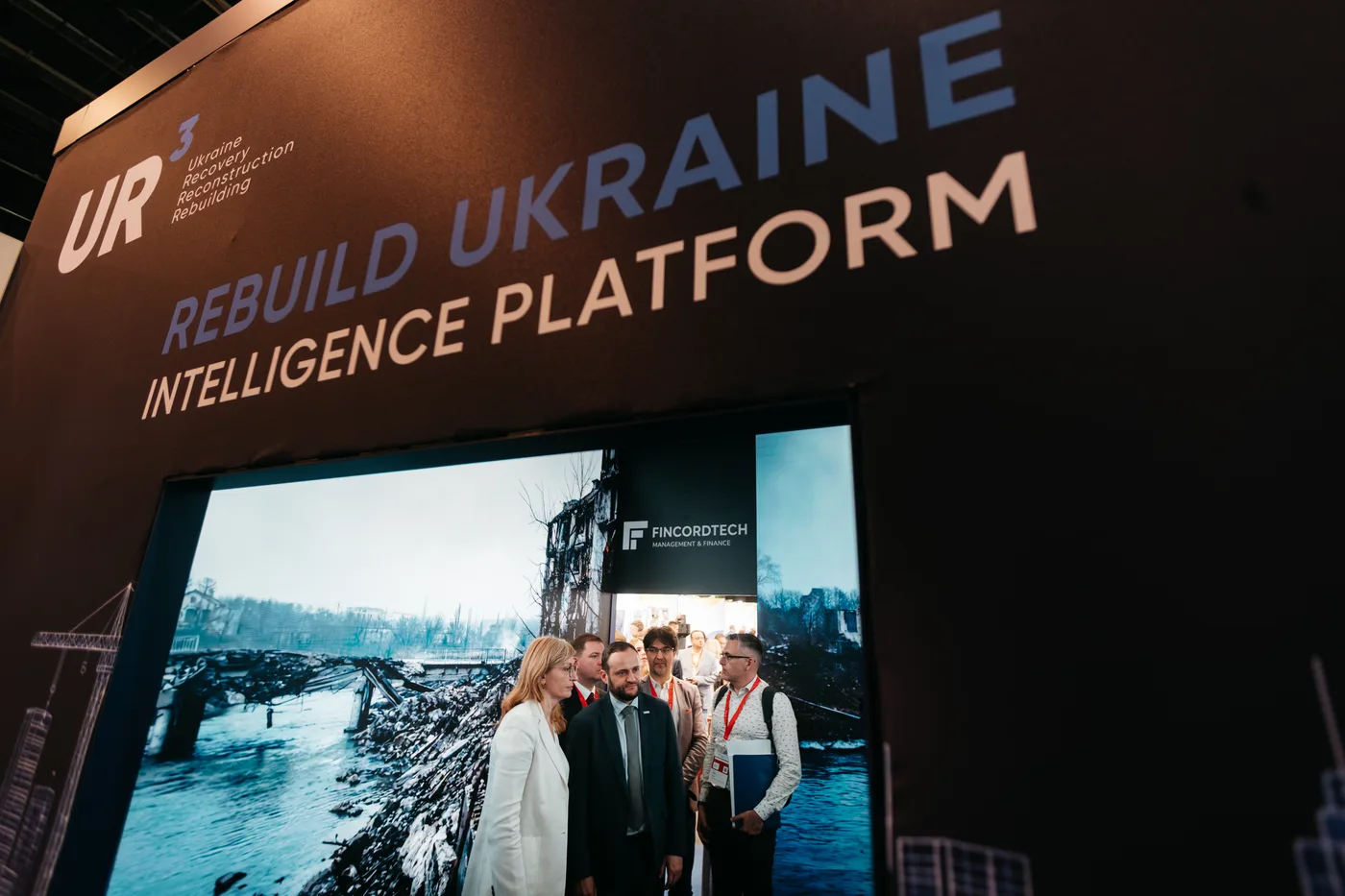
The AI models scenarios based on demographics, security, and resources, automatically shaping a portfolio of investment projects. For the state, this means transparency and minimized corruption risks; for investors, a clear picture of promising areas.
A similar system using AI-driven big-data analysis technology can be used to implement energy resilience plans for cities and regions and for rapid response in the event of enemy attacks or emergencies.
The system automatically generates backup plans for the energy system’s operation. It instantly prioritizes the restoration of hospitals, schools, and other critical infrastructure, and proposes solutions within minutes.
Source: mininfra.gov.ua
Tags


